A Rhapsody of Birds
Spring erupted in gorgeous blooms across the oak woodland meadow around my home. Similarly, the extensive native plant garden where I’ve labored over the years, nurturing delicate roots wrapped in wire cages to prevent gopher disaster, is flourishing this year. The foliage is host to caterpillars, spiders, and the like, providing food and shelter to a variety of birds at the peak of nesting season. Pollinators abound: butterflies and bees, of course, as well as Anna’s Hummingbirds who have no need for sugar-water feeders that require daily human attention.
To celebrate May Day, I planned a garden party. Weather forecasts for the upcoming week promised sunny skies and mild temperatures, perfect for being outdoors. Since all my neighbors were invited, it would be a large crowd if past years attendance was any measure. Some uninvited guests would show up, too, but that is to be expected when you host a come one, come all gathering with an endless buffet of free food.
It turned out to be a grand affair, an immersive auditory experience like none other that I had ever heard. Just imagine, wall to wall surround sound powered by the very best Dolby Atmos, cinematic in scale and decibels. Woofers did their job, but it was the tweeters that really made the day, as you will soon discover.
Being a garden party, everything took place outside. The soundstage was expansive, sweeping across the spaces that I see from my yard, around, overhead, and below the many oaks in proximity to my house. The trees were ablaze with sound, thanks to my neighbors of the feathered kind. Tweeters were everywhere.
Most of the year, I hear calls from at least 15 different species on any given day; there is an assortment of regulars I can always count on. Vocalizations might be intermittent, though, and perhaps only during certain hours. At times, I might not hear anything but the wind, barking dogs, neighbors’ voices, and passing cars.
Come spring, everything changes, The species count in the woodlands around me will surpass 50 during peak migration. Vocalizations are frequent, unmistakable, front and center. Come sit with me now as I describe a rhapsody of birds that enraptured my senses over the course of several days.
On garden party day, the sound of birds never ceased during daylight hours; a feathered caller was always vocalizing, and, commonly, several all at once. Most notable were California Scrub-Jays, Eurasian Collared-Doves, European Starlings, Oak Titmice, and White-breasted Nuthatches. Their chatter was relentless, rising above all the other voices.
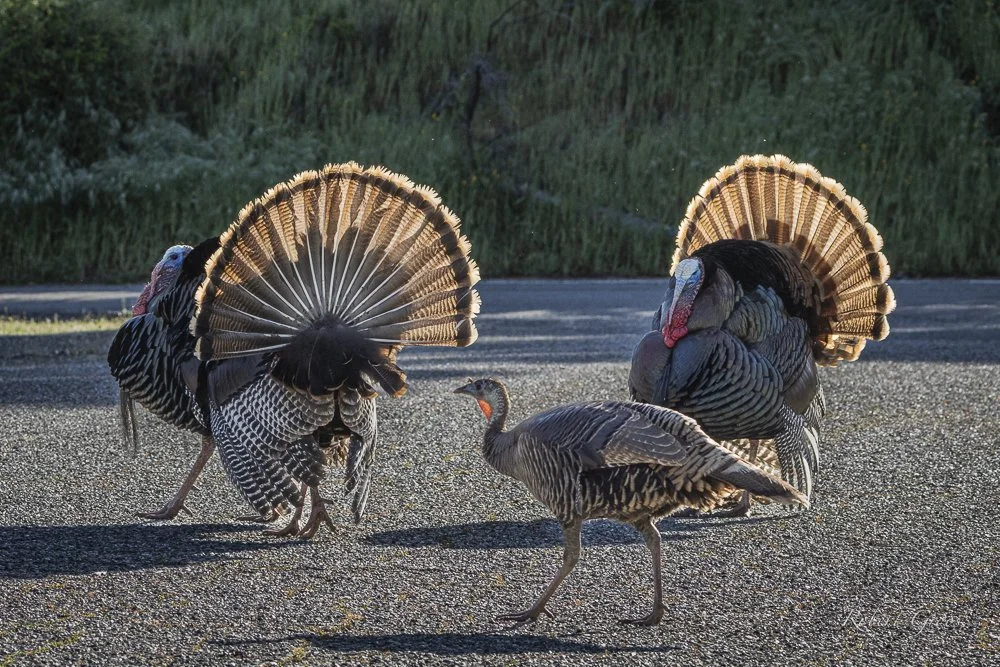
The day begins before the sun rises over Revis Mountain to the east. My house is still in shadow when the hillside to the west first comes aglow at its summit. Ten Wild Turkey Toms announce daybreak with their vociferous gobbles as they attempt to attract the favors of any one of the four available hens foraging the black oil sunflower seeds I toss out daily.
(Please turn speakers up)
Their boisterous calls fill the air around my home. As the hens move on to another location, the Toms follow, and the gobbles trail away. The gobbling begins anew later in the day as the hens return for water, and rest under my shade trees.
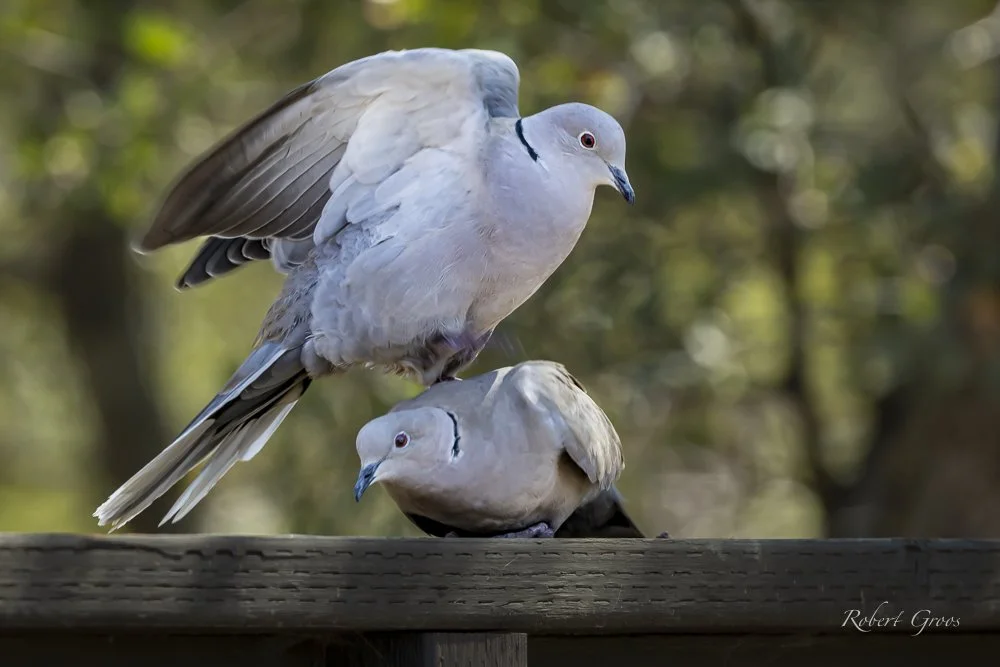
Three Eurasian Collared-Doves coo a sweet refrain, discreet, yet penetrating. The incessant repetition provides a distinct background rhythm that pulsates throughout the day as they fly from tree to tree, to utility lines, or onto the ground. Their voices seem to reassure everyone that all is well.
Kindred Mourning Doves, likewise, join in song early this morning, but you have to be near to hear their cotton-soft murmuring. Sotto voce is noted on the music score.
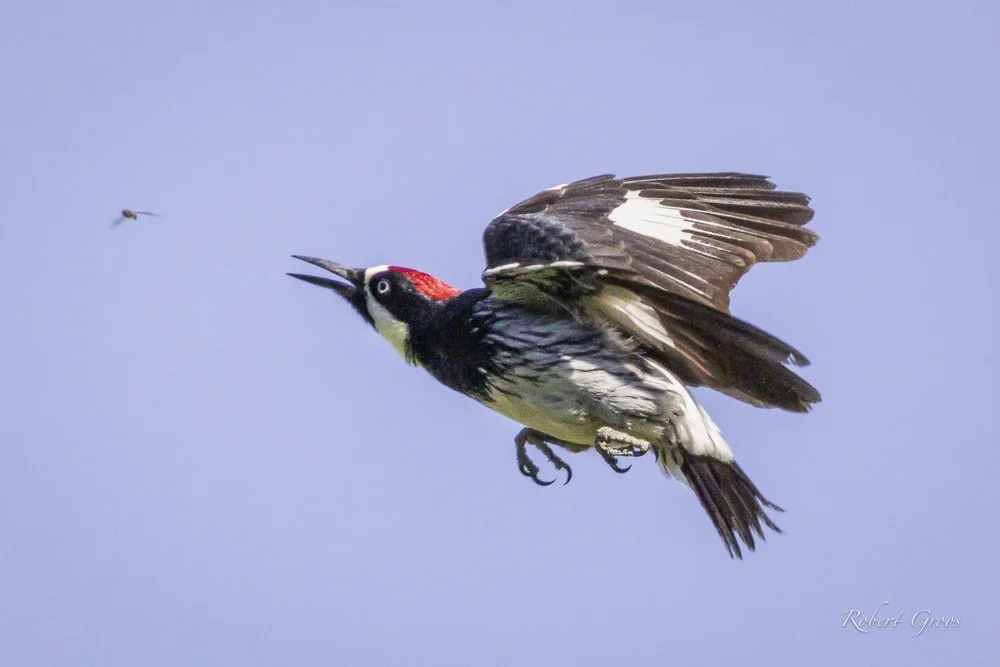
The sun is up and Acorn Woodpeckers are now on the wing, snatching flying insects out of the sky. Four, in particular, make repeated sorties from a tall snag a few hundred feet from the house. They persevere all morning long with a break from time to time to come peck at a seed cake feeder that entices a variety of birds to my backyard. Their raucous chortle spills across the soundscape. I cannot help but laugh along with them.
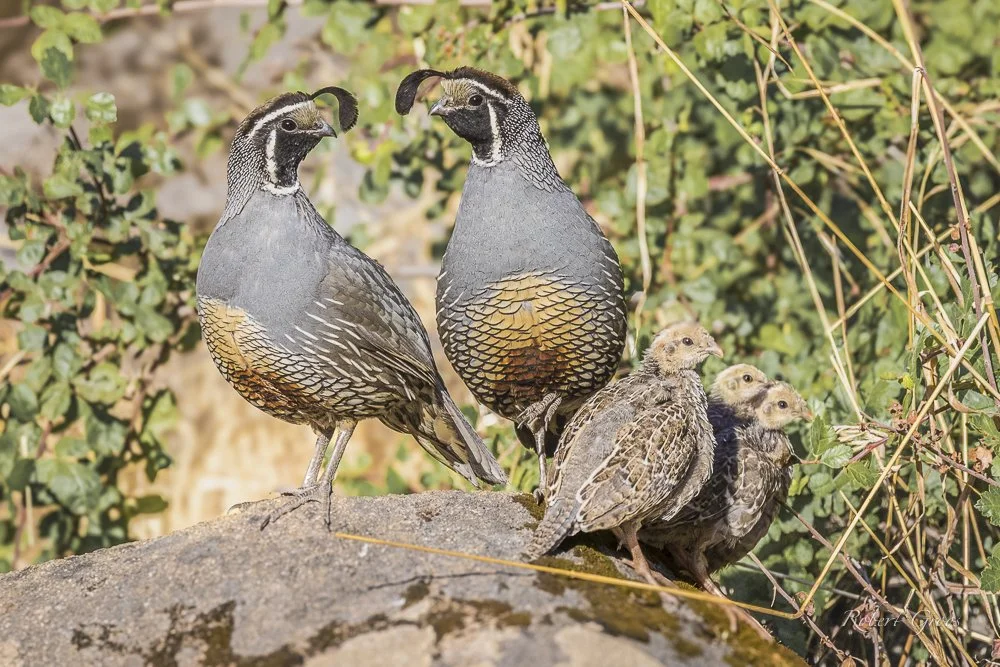
In the meadow below my house, California Quail announce their presence by shouting “Chi-ca-go,” letting others know they have arrived and are looking for companionship.
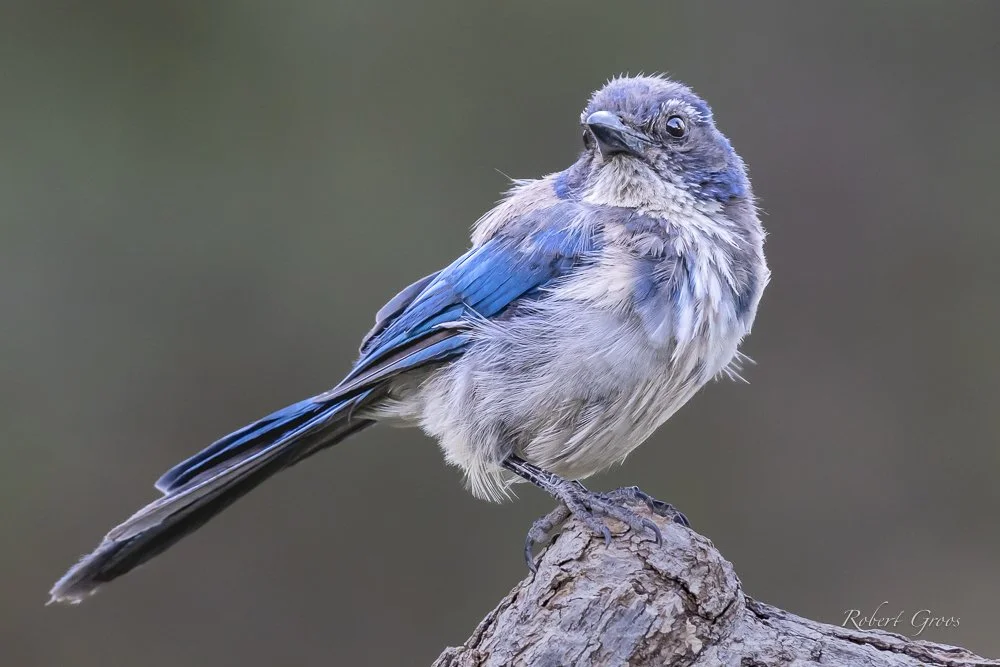
The wild card on the list of avian guests is the California Scrub-Jay. There are at least six, including newly fledged juveniles judging from the fresh, downy quality of their plumage. True to their bossy nature, razor-sharp screeches can be heard above the din every few minutes. They rocket out from the foliage onto the ground to grab a doomed insect that has caught their eye. It is uncanny how they suddenly appear within seconds of my arrival in their particular patch where I toss bird feed around in the early morning.
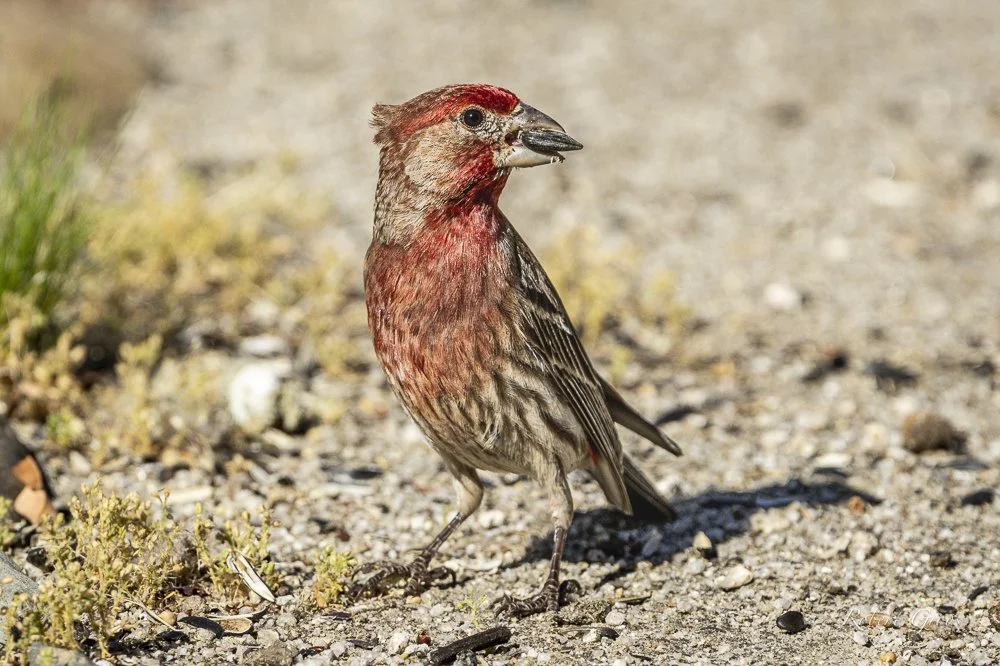
House Finches abound, too, always on the move looking for something to eat. Their chorus of glad tidings matches the cheerful color of the male’s crimson breeding plumage. “Strike up the band,” their song seems to declare.
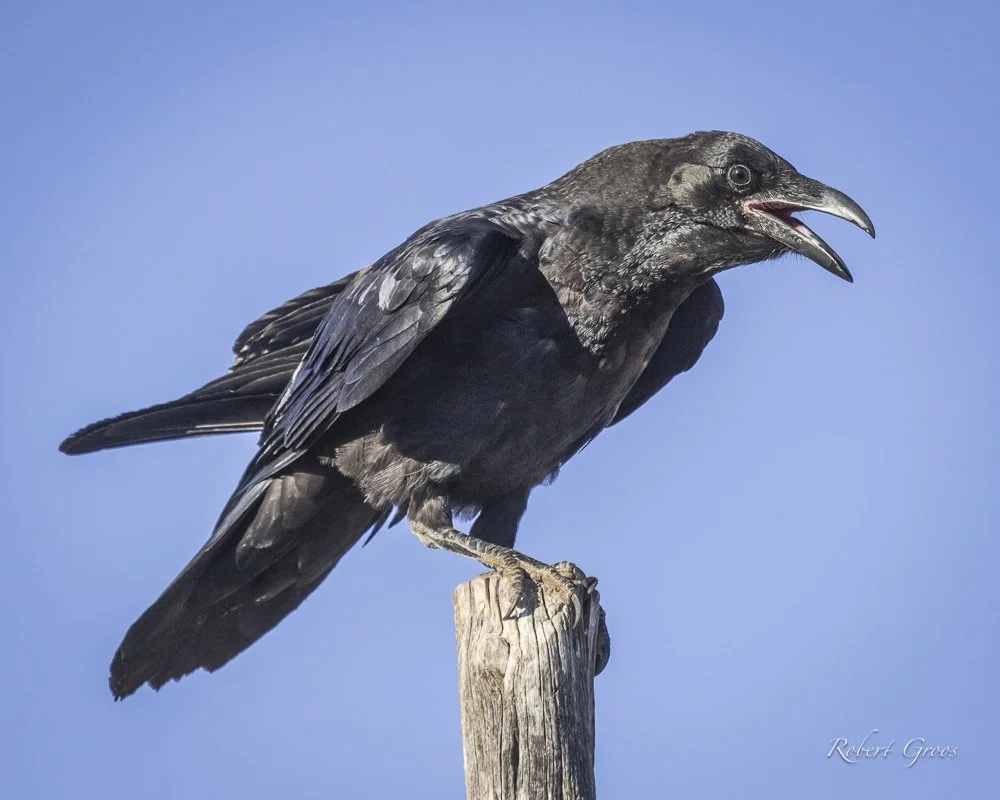
From time to time, Common Ravens add to the cacophony: “Caw!” Determinedly, they course over the trees on their way to some business more important than a garden party with tiny songbirds. “Caw, Caw.” There they go again, this time mobbing a Bald Eagle that happens to enter their airspace. “Caw, Caw, Caw, get out of here,” I hear them shout.
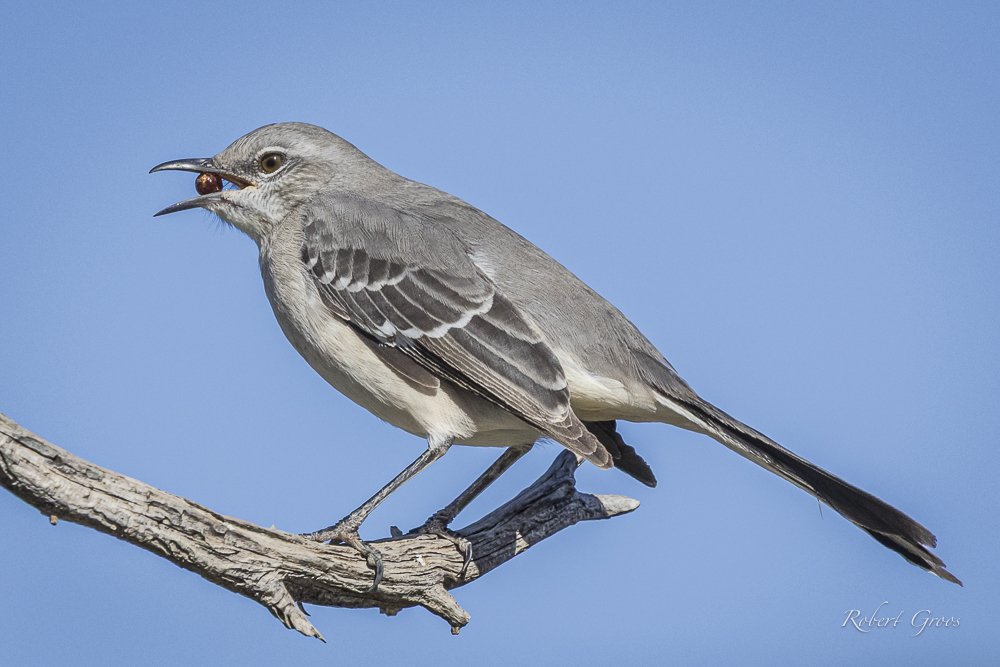
Every party needs some entertainment. This year, we have an exceptional guest. He is a master ventriloquist, and a virtuoso of song. Taking center stage, he unleashes a vocal panache. Melodious, as usual, and longwinded, he imitates several other birds. I never fail to stop what I am doing and listen to the message, trying to decipher which bird is calling. Northern Mockingbirds never fail to enchant.
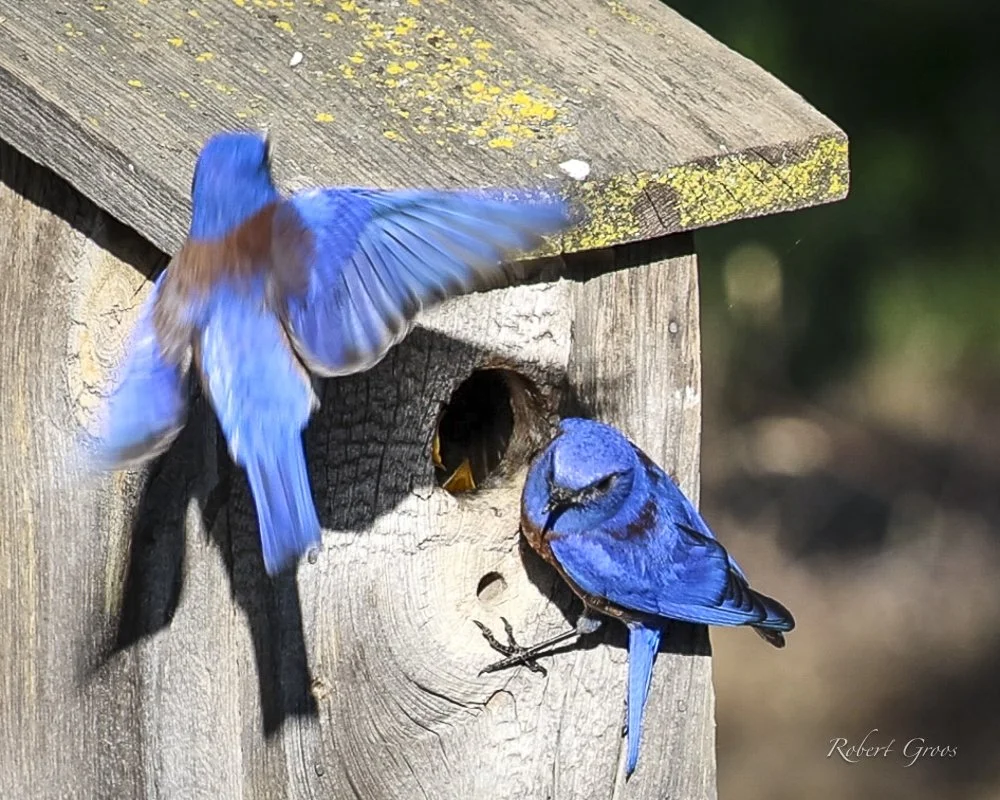
Western Bluebirds, meanwhile, are busy inspecting nest boxes I’ve strategically placed against the trunk of two giant oak trees. Their cheerful, but brief chatter lends a gleeful note to the mixture of other vocalizations that fill the air. This pair ignores the party festivities, however. Selecting a nesting site is an important decision the female will have to make, and that is where her attention is focused today.
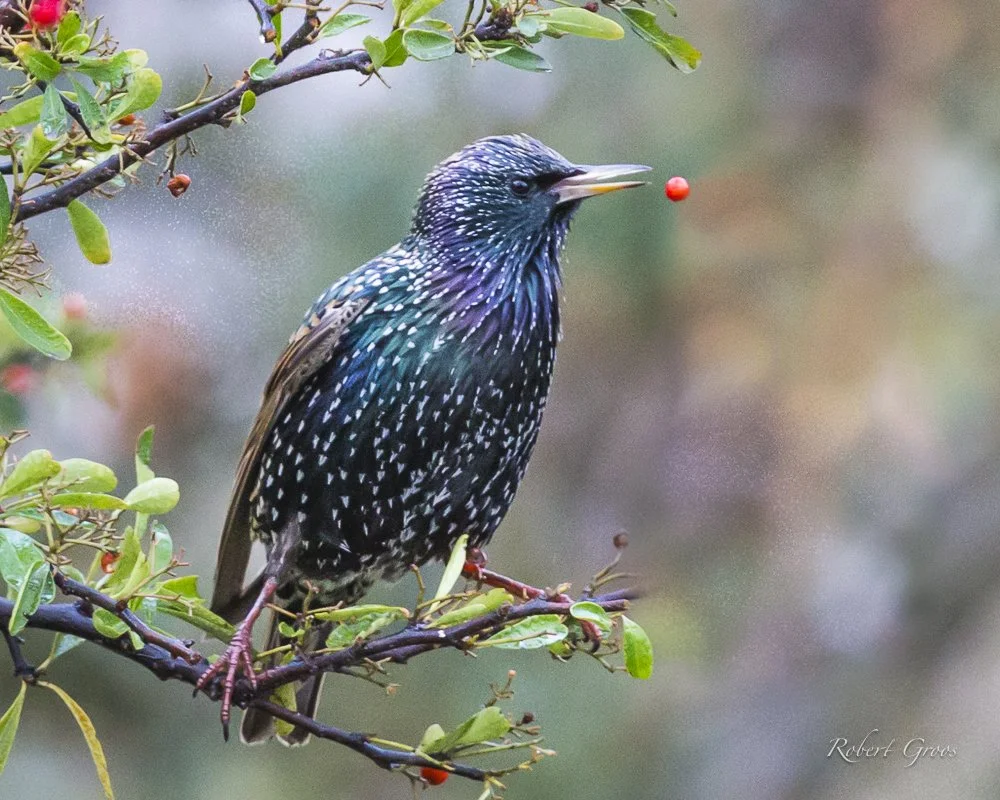
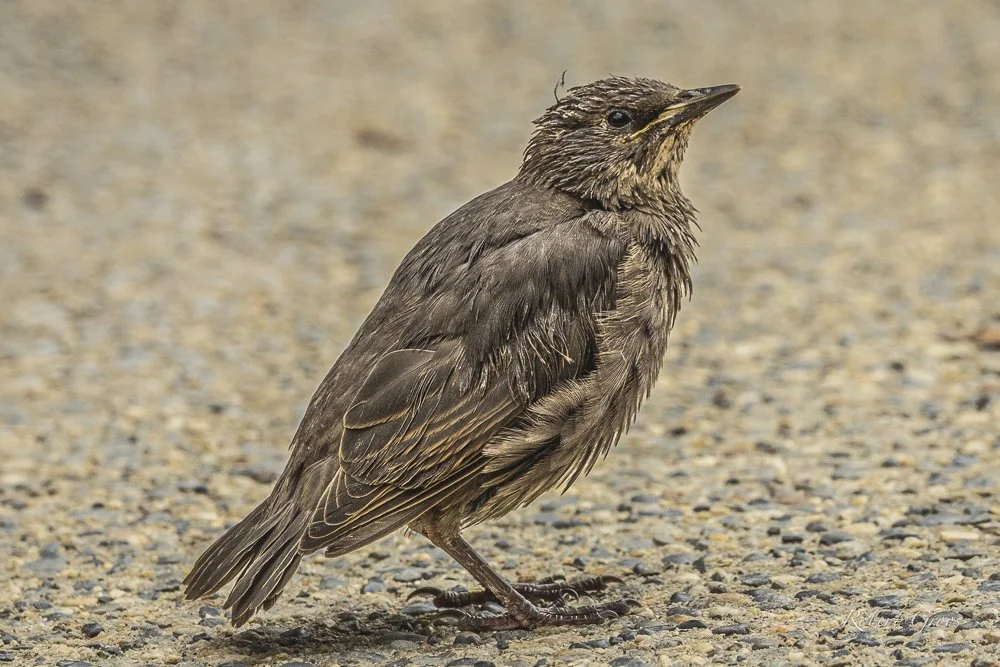
While I listen to the sweet song of bluebirds, from out of nowhere, like a motorcycle rumbling through the neighborhood, destroying your feeling of calm and repose, there arrives a succession of recently fledged European Starlings. They wheel through the sky in gangs of four to six individuals. Their rowdy “psh, psh, psh, psh, psh, psh” deluges the soundscape, drowning out the voices of my garden party guests. Will they land on my property? They were not invited, indeed.
It wasn’t always this way. Several years ago, while taking morning walks, I often heard a single-note whistle produced by a lone, unseen bird a few blocks from my home. I did not know who made that sound. It was a mystery to me until the Merlin app came to my aid. Over time, those whistles multiplied. Then, a few years ago, I started hearing those unsettling “psh psh psh, psh” sounds close to home. I suspected it was starlings, but didn’t know why they made that particular sound in the spring.
This year, they invaded my space, every day for three weeks beginning in mid-April. Their unsettling noise rattled the soundscape of my property again and again, morning and afternoon. A free-hanging suet cake would not survive the day if they caught scent of it. And if one or two washed in the birdbath, the crystal clear water turned mucky, greenish-yellow. How could a bird become so dirty?
My photos revealed these were fledglings. Were they begging for food from their parents? Ultimately, silence thankfully replaced their noisy supplications. But they still devoured the suet cake, and turned the birdbath water into muck.
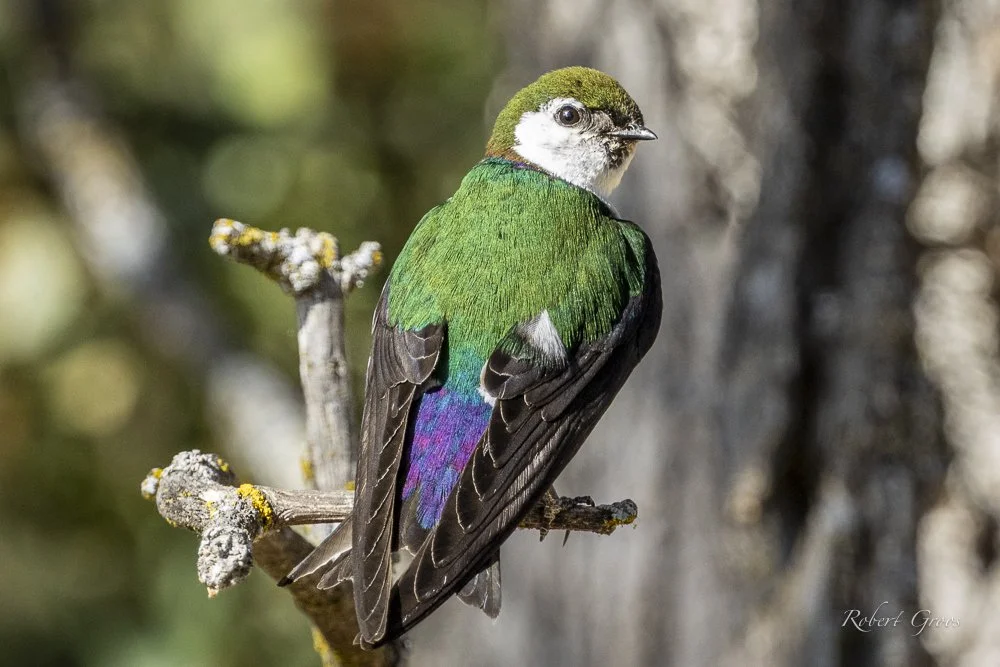
In contrast to the starlings, the sound of Violet-Green Swallows makes for a pleasant, rushing leitmotif that blends in with the other voices. It fades in and out as they swoosh around the tree canopy, snatching newly hatched insects out of thin air. Every year, I look forward to seeing their resplendent plumage and hearing their flight calls beginning long before dawn. I know that they will keep the flying insect population in check along the seasonal stream that transects my property.
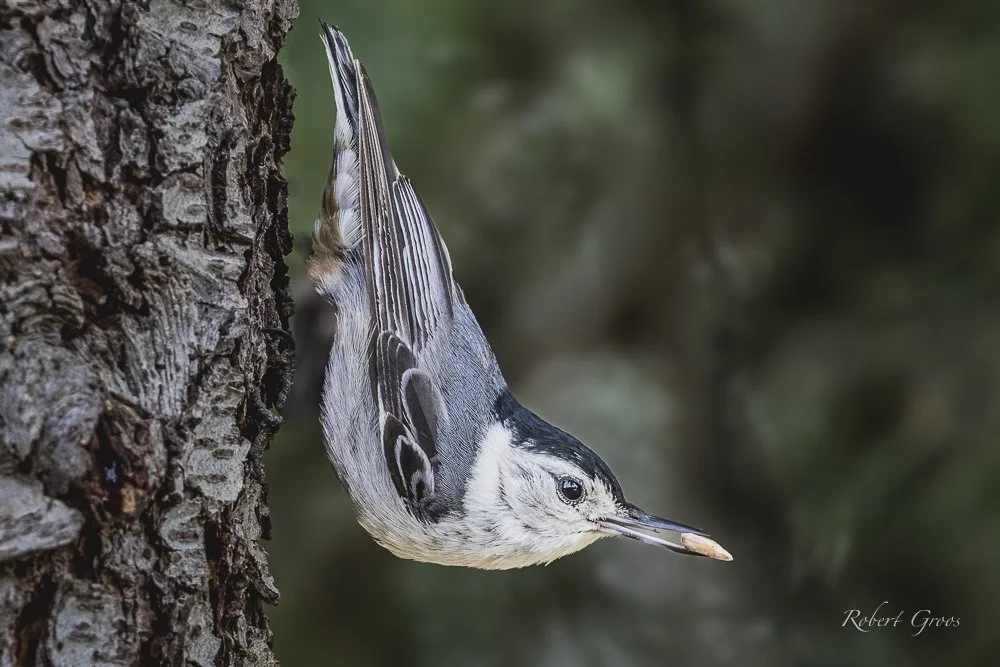
“Yank-yank-yank.” What’s that clank I hear now? Unmistakably, that is the nasal barking of White-breasted Nuthatches pulsing among the other peeps as they scramble up and down the tree trunks and onto the ground to nab a prized sunflower seed, which they take up onto a branch, hold between their toes, and hammer open with repeated jabs of the beak. Several chicks just fledged the nest. They all continue to beg for food, non-stop, and seldom remain in place for more than a second or two. That “yank, yank, yank” cry sprints from tree to tree.
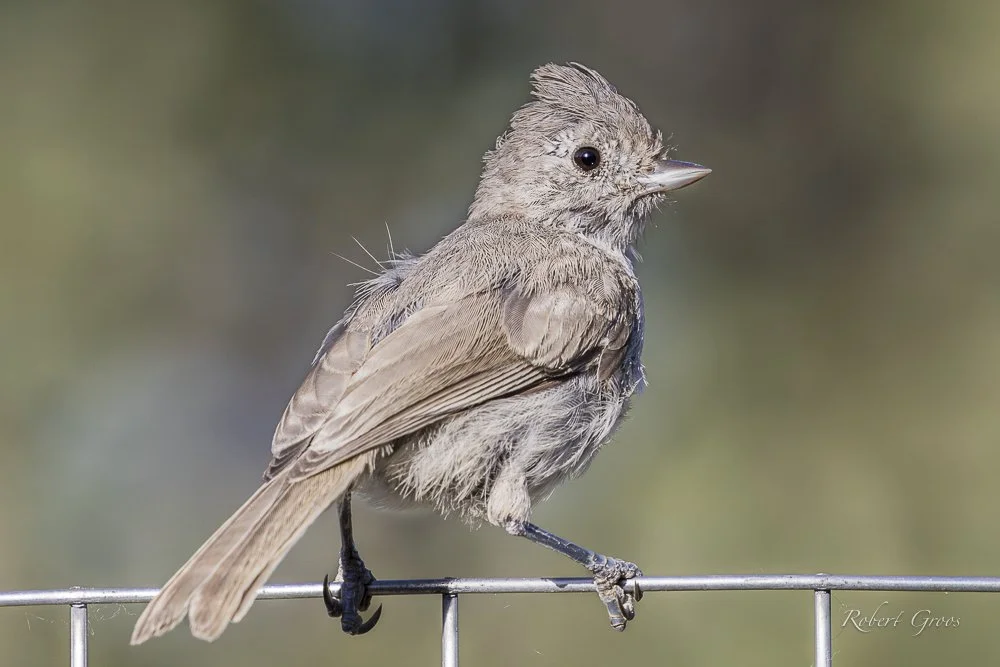
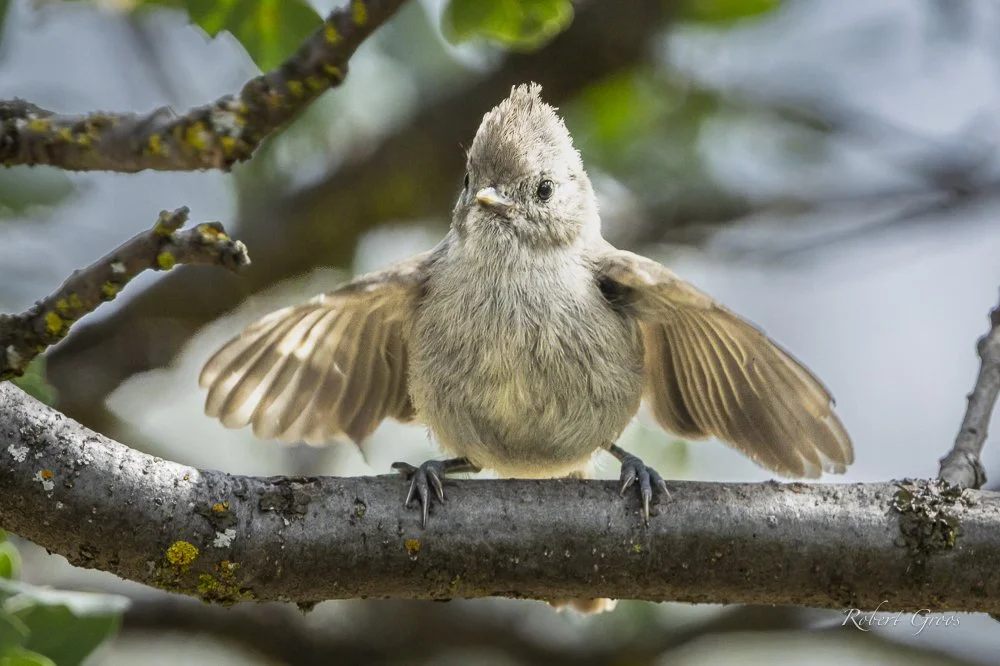
There is one final act in this extraordinary kaleidoscope of birdsong that materialized during my garden party. The performer? The Oak Titmouse, a drab, gray-brown bird that generally blends in with the landscape. I’m not sure if this sparrow-sized bird would ever appear on anyone’s short list of star avian vocalists – except, perhaps, during breeding season when the male exhibits a repertory of songs, and shares a variety of high-pitched chatter with its mate.
How, then, did the Oak Titmouse take center stage during my garden party? Four very hungry chicks fledged this year from an oak tree cavity nest near my garage. Parents and chicks flew continuously from one tree branch to another, from tree to bush, and from bush to the ground, in close proximity to my patio for several days. I watched, I followed, and I listened in wonder to their rapid-fire, raspy “sisip, sisip, sisip, sisip” calls from before dawn to dusk.
These unmistakable titmouse vocalizations stood apart from those of all the other birds. It was a big sound from a mousey little bird that electrified the soundscape with an incessant buzz. My auditory nerve was in overdrive. It is no surprise that field biologist David Shuford once described the Oak Titmouse as the “voice and soul of the oak woodlands.”
At various intervals, when the dominant voices seemed to miss a beat, minor soloists made themselves heard: a cheerily American Robin, a stuttering Ash-throated Flycatcher, a yodeling Black-headed Grosbeak, whistles and rattles of a Bullock’s Oriole, calls and drumming of a Nuttall’s Woodpecker, sputtering of a Western Kingbird, a warbling trill from the Yellow-rumped Warbler (aka Butterbutt in birding circles), and others that I could not discern. Yes, they were all here for the garden party, even if they stayed off stage.
With the passing of May, the garden party came to an end. The incessant clamor of begging chicks petered out. The everyday sounds of life reemerged. Now, when I venture outside, I hear the breeze in the leaves of the trees, the sounds of motors and tires rolling down the street. There are always bird vocalizations somewhere, of course, but they blend in with the fabric of everyday life, and it would be easy to ignore their presence.
Some people venture into the woods to forest bathe, seeking fresh air and relaxation in the beauty of the surroundings. Some will meditate, hoping to clear their minds and improve their sense of well-being, before heading back to the demands of city life. As for me, I choose to bird bathe. I don’t get wet, of course. I bathe in the rhapsody of birds in my garden, at any time of year, in the oak woodland foothills of the Sierra, south of Yosemite National Park.
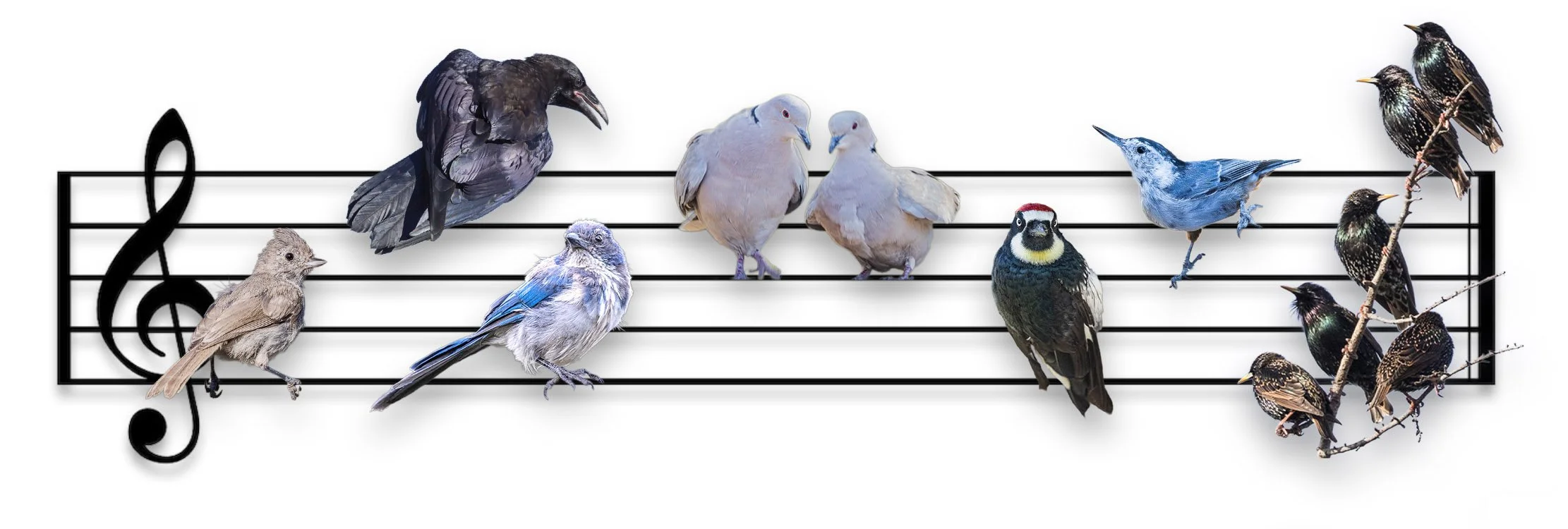
Picture now a musical score representing all the sounds, the rhythms, and tonalities that my birds unleashed while perched, or on the wing, at various locations, continuously changing, from dawn to dusk. You can replay at your pleasure each of the featured vocalizations, in any sequence you wish, to create your own rhapsody of birds. Enjoy the gallery below of the main attendees of my extraordinary garden party event.
If you enjoyed this post, please share the link with your friends. To be added to my mailing list for future articles, contact me at: robertgroos1@gmail.com. Your information will not be shared, and you can unsubscribe at any time. Thank you.