Saving Threatened Western Snowy Plovers
There are hunters today on a lonely, narrow stretch of sand in Central California near Morro Bay. I am one of them.
It is low tide. I’m sitting on wet sand at the very edge of the water, my camera mounted on a tripod next to me, enjoying the warmth of an idyllic sun, no wind, and the sound of a gentle surf. I am deeply absorbed by all that I see around me when a firm voice yanks me out of my reverie:
“I have to ask you to leave now.”
That admonition came from another hunter on the beach that summer morning. She was one of the State Park biologists who visit areas like this from March through September. We have both come here for the same reason: Pacific Coast Western Snowy Plovers (Charadrius nivosus nivosus) who are known to assemble here, socialize, and nest.
Biologists are part of a statewide initiative monitoring Western Snowy Plover populations at numerous nesting sites. They perform various field research tasks, look for evidence of predation of the eggs or hatchlings, and maintain seasonally installed perimeter rope fences that separate public beach access from known nesting areas along the dunes.
In contrast to the biologist, I was seeking adventure and discovery, hoping to photograph a Snowy Plover chick, as well as other species that might be foraging in the wrack (seaweed) which the tide had washed ashore. Instead, I came away with a story about conservation of a threatened species.
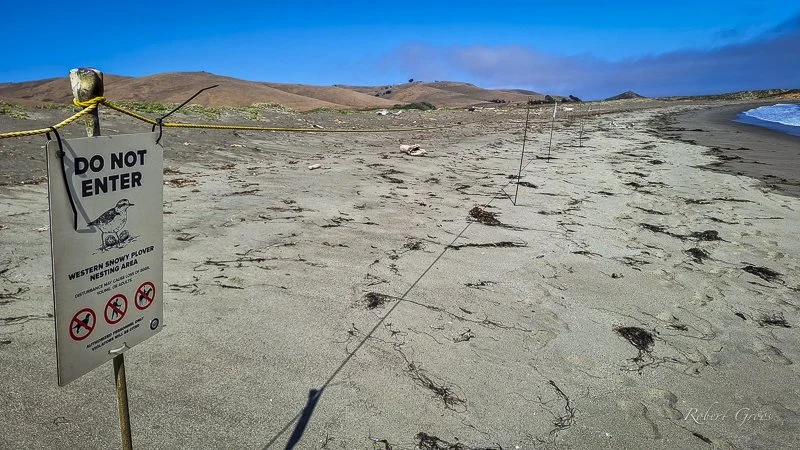
Beach where Western Snowy Plovers nest
Having been here a while, and with a rising tide inching closer to my feet, I was ready to leave. So I had no objection to that firm directive, and assembled my gear. The biologist explained her concerns about my presence while we walked together towards the other end of the 1/2-mile beachfront, where we went our separate ways.
Two things stood out for me from this conversation.
First, Western Snowy Plovers are nervous birds, like another species in the same family—Killdeer—that I’ve written about here. They constantly monitor their surroundings and can often be seen looking skyward. If a perceived predator seems to be watching, that unwelcome attention might cause a breeding pair to abandon their nest, which is nothing more than a simple scrape in the sand. A person like me with a camera, watching and lingering too long nearby, the biologist continued, might trigger that negative response, resulting in fewer eggs being hatched.
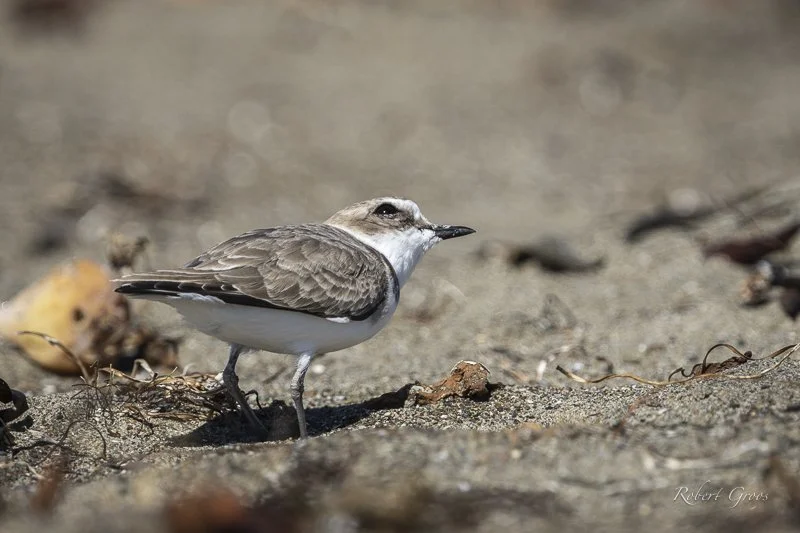
Western Snowy Plover watching for aerial predator
What is too close, I wondered? I’ve always taken care to pay attention to the behavior of the subjects I’m photographing. If they seem disturbed by my presence, I move to a place further away where they no longer seem agitated, and wait for them to approach me. But the possibility of nest abandonment at this time of year added a critical element to my proximity that needed to be heeded.
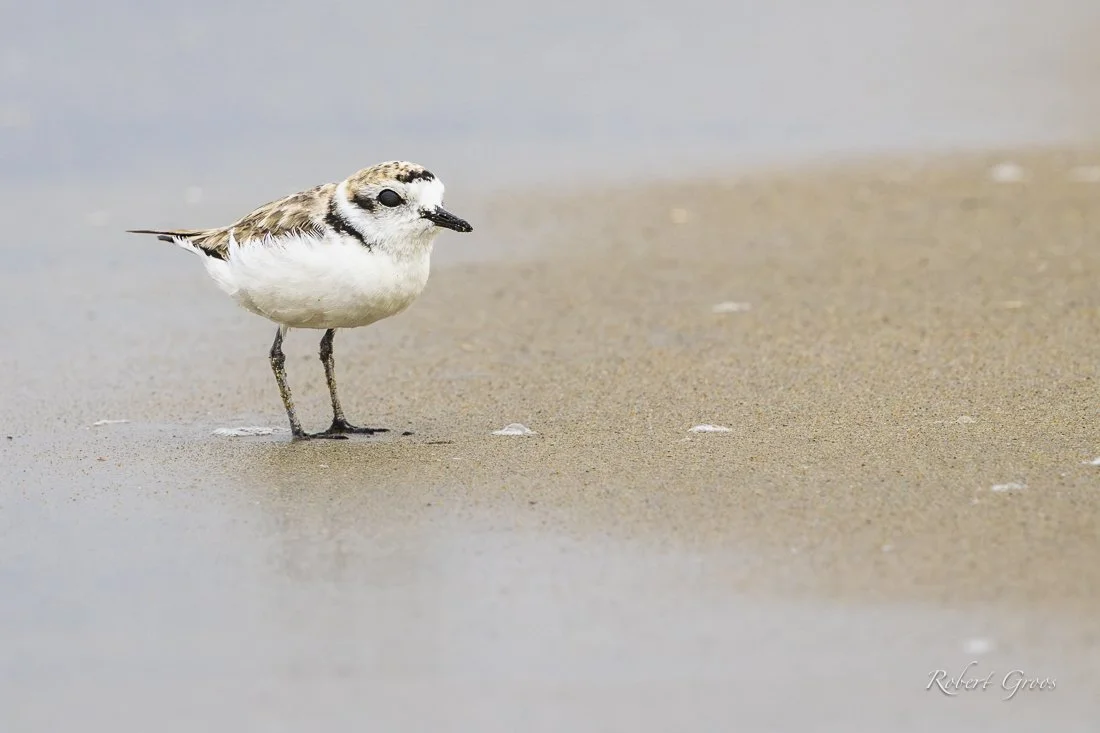
How might you describe these tiny shorebirds with long legs and a short neck? Well, grab a handful of sand and make a ball. Splash it gently with sea foam floating up onto the beach. There, now you have one: a Western Snowy Plover. Roughly the length of a house sparrow, this plump little bird is only about 6 inches from beak to tail. With plumage that combines shades of snow (hence its Latin name “nivosus”), wet and dry sand, they meld into the landscape and disappear.
Hunkered down in a shallow depression, or behind debris that has washed up onto these fragile dunes, these little birds might be invisible to an untrained eye. An innocent stroll next to the “keep out” rope fence might bring a casual walker close enough to startle them out of their repose. One might even step on eggs they’ve laid water-side of the area the biologists cordoned off; human barriers have no meaning to the nesting birds.
How many Snowy Plovers can you find in this photo? There are at least twenty in the lower half.
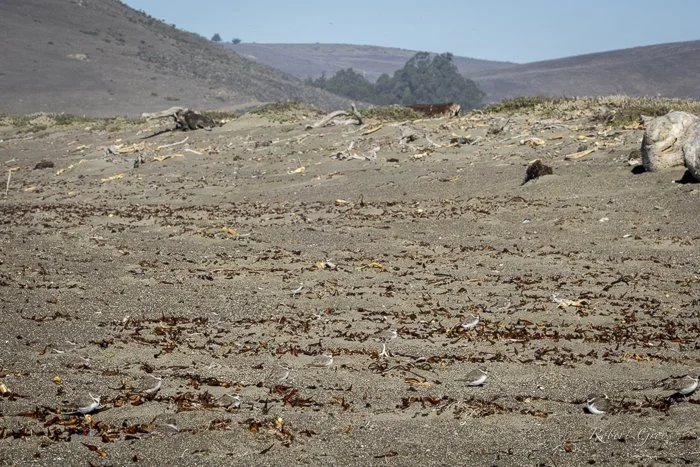
Western Snowy Plovers resting on beach dunes
Aside from human activity close to nesting birds, predation by coyotes and other four-legged creatures as well as hunters who arrive on the wing is an ongoing concern. Already this season, the biologist explained, ravens had taken the eggs from two nests. While the adults might mate again, they just as well might not, with the result that at least six fewer chicks would be added to the fragile population this year.
And the ravens? They would surely return throughout the nesting season, posing an ever-present threat to nest success.
Having reached the other end of the beach, the biologist continued her morning rounds of the area, and I walked towards the parking area, deep in thought.
What could I do, save not come to this beach, to assure my activity did not have negative consequences? Western Snowy Plovers generally nest on dunes above the high water line where wrack and other debris are deposited. There is a rule of thumb for beachgoers to follow: walk on the wet sand between the water and the wrack line. Snowy Plovers and other birds may be foraging in this area, but they are not nesting there. This is why I was sitting in wet sand at low tide that summer morning, watching various birds forage in the tidal flats.
While Western Snowy Plovers breed on dunes from Baja California north to Washington State, California accounts for the majority of active nesting locations. Unfortunately, today there are only about half as many historical nesting sites as there were prior to 1970. Surveys made in 2000 estimated that only 1,500 breeding adults remained.
Habitat loss has much to do with the population decline. Climate change is producing higher tides that result in significant dune erosion, and nests being washed away. Likewise, coastal development—commercial, residential, military—is a contributor to the problem.
Human recreation along the shore also plays a consequential role. Permitted off-roading on beach dunes, and thousands of beachgoers seeking sun and fun—some flying kites or walking dogs off leash—during prime breeding months take their toll.
Hoping to reverse the downward population trend, the federal government listed our subject species as “threatened.” The U.S. Fish & Wildlife Service has designated 130 recovery units, where dune restoration and invasive species reduction projects are ongoing, with a goal of delisting the “threatened” designation by 2047. Since 2004, a population count is conducted in May throughout the entire breeding range. Progress is being made. In 2025, over 3,000 individuals were tabulated.
My interest in Western Snowy Plovers was sparked when, by chance, I spotted two at Huntington State Beach (200 miles to the south of where I was sitting in the wet sand) while visiting family. They darted about among surfers and sun seekers strolling nearby, certainly minuscule in size compared to the people all around them who were oblivious to their presence.
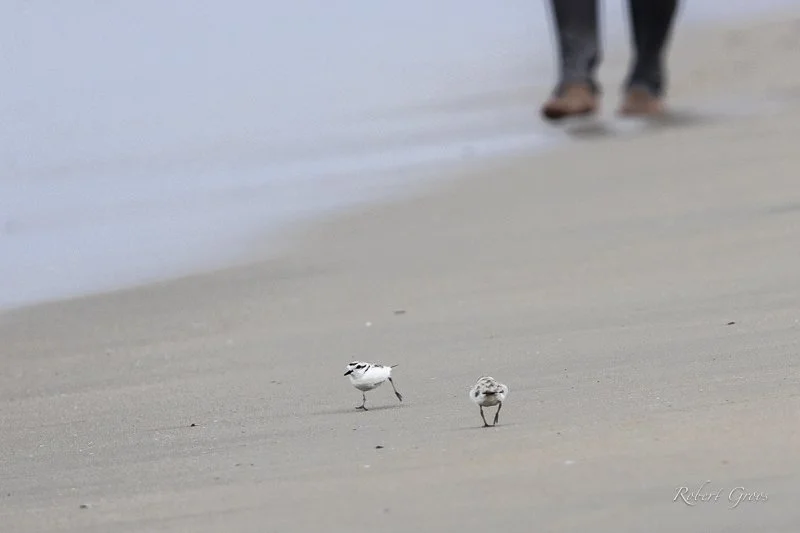
Western Snowy Plovers running on beach
That day, I noticed a few flagged wire cages further up on the dry sand, and a lifeguard informed me that plovers had laid eggs there. Part of the population restoration initiative, cages like these allow access by birds that have established a nest, while protecting eggs from predation and disturbance by curious humans. The chicks had already hatched, so there was nothing of interest to see, other than the cages themselves.
Because of all the activity on crowded southern California beaches, I knew I had to find a place that was more conducive to observation and photography. Compared to a six-hour drive to SoCal in heavy traffic from my home in the oak woodland foothills near Yosemite National Park, this beach along the Morro Coast was ideal, and only a three-hour drive.
Western Snowy Plovers eat tiny crustaceans on the surface of sand, and in piles of rotting seaweed where a variety of flies are easy pickings.
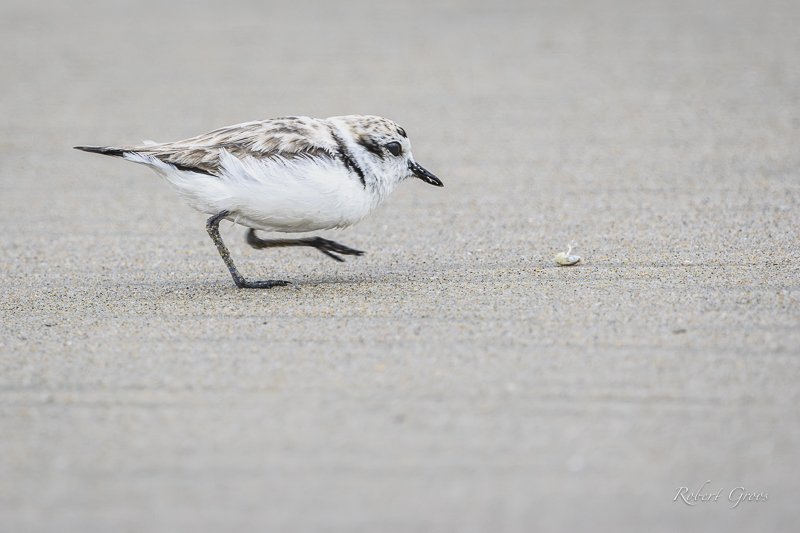
Western Snowy Plover chases food on beach
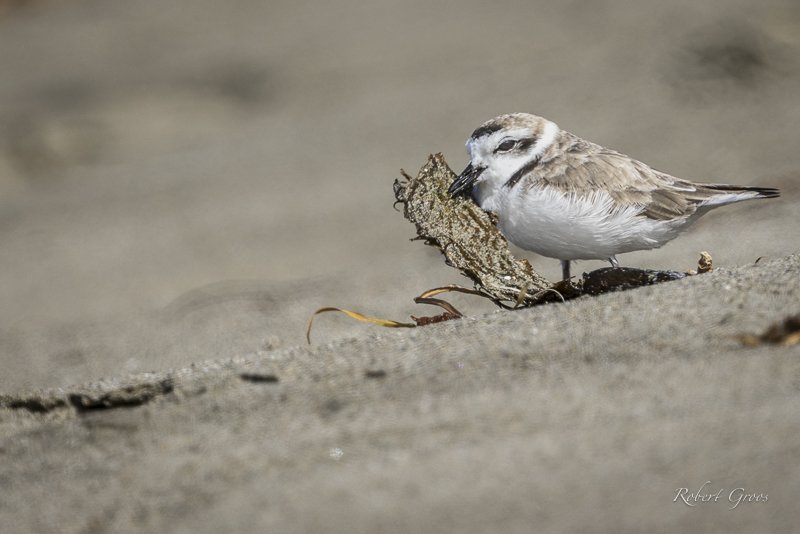
Western Snowy Plover eating flies on seaweed
Often zigzagging in a burst of speed, they forage in a distinctive three-step pattern: they run, they stop, they snatch their prey. Repeat. This hunting process is entertaining to watch, especially when they come so close to where I am sitting. Do they even realize I am there?
I never did obtain my wish of seeing a newly hatched chick walking on the sand during the various visits I’ve made over time. Juveniles, yes, but not a newly hatched chick. Time of day, weather, tides, simple good luck—they all play a part. That is the nature of bird photography, especially when you are visiting from out of the area and learning the lay of the land.
Sometimes, though, the unexpected happens to change the focus of the hunt. And that, extraordinarily, is what came to pass for me. When I processed my photographs after one visit, I saw that several birds had colored bands on their legs. This was an exciting discovery.
Banding is part of the Western Snowy Plover restoration project. Having photographed other birds with tags, I knew I could query a dedicated website to learn when and where my birds had hatched. Then, if I ever saw one of those color combinations again, I would know whether a particular bird on the beach that day was part of a resident population or possibly a seasonal migratory visitor. Following are a few of those identifications:
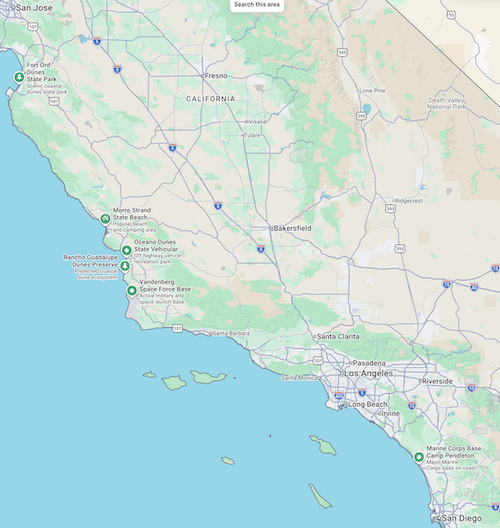
1) This individual hatched in 2023 at Vandenberg Space Force Base, about eighty miles away. It is one of three hatched at VSFB that I saw that day:
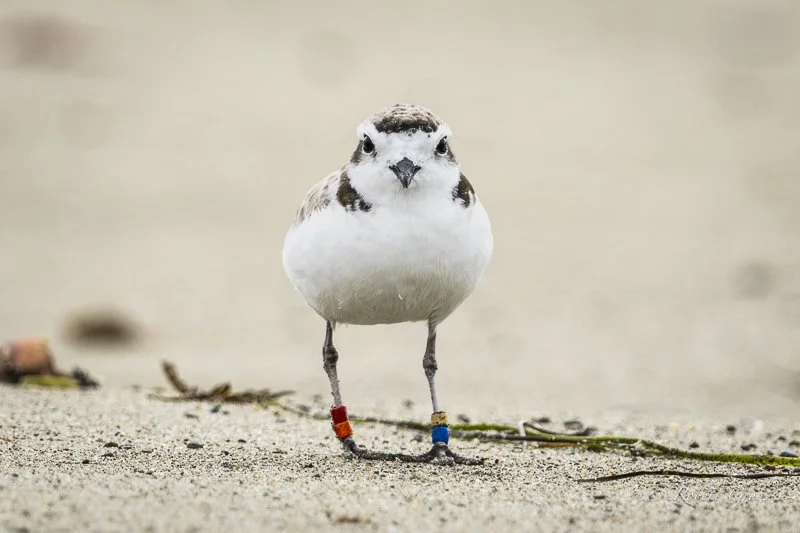
Banded Western Snowy Plover from Vandenberg Space Force Base
2) This individual hatched on 4/20/15 at Fort Ord Dunes, a one-time military base, now a California State Park about twenty-five miles away. This bird was already an old-timer when I photographed it in 2025:
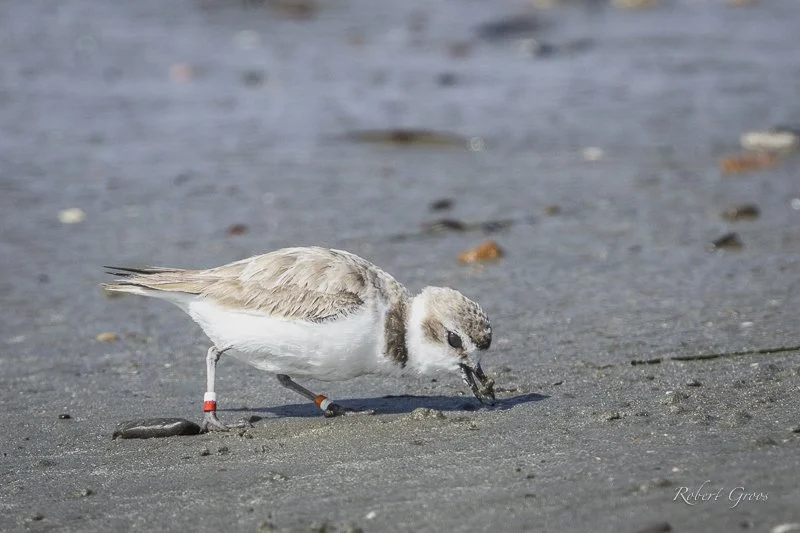
Banded Western Snowy Plover hatched at Fort Ord Dunes State Park
3) This male hatched in 2019 at Oceano Dunes, a California State Park, about thirty miles away, where off-roading is allowed:
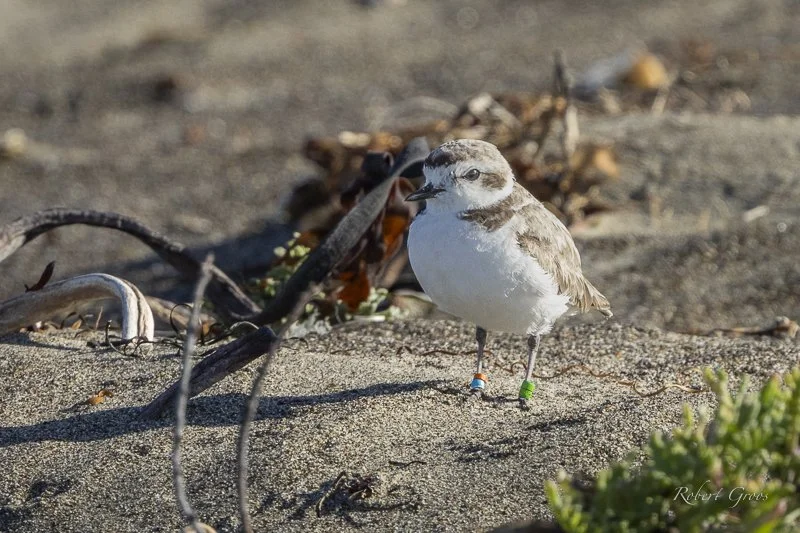
Banded male Western Snowy Plover
4) This individual hatched in 2024 at Rancho Guadalupe Dunes Preserve, where off-roading is allowed, about twenty miles away:
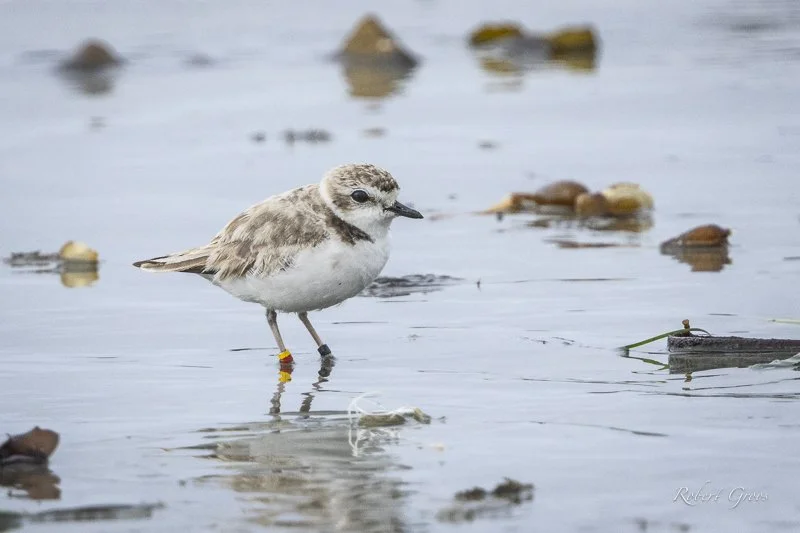
Banded Western Snowy Plover foraging in water
5) This male, one of my “spark birds,” hatched in 2021 at Marine Corps Base Camp Pendleton about thirty miles from Huntington State Beach where I photographed it in 2024:
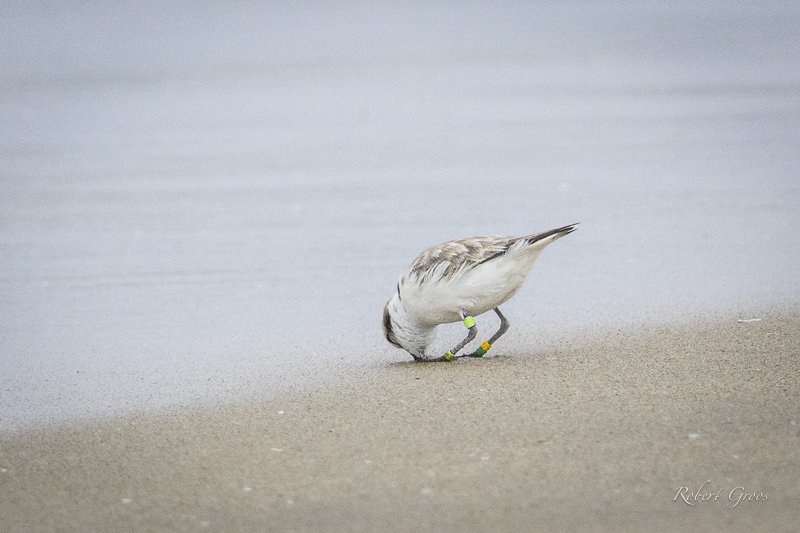
Western Snowy Plover foraging at Huntington State Beach
Location of referenced beach dune nesting sites:
The possibility of discovering colorful bands on my subject birds adds a whole different dimension to my photography project. Rather than looking for newly hatched chicks whenever I return to that lonely stretch of beach, I can now look forward to seeing an individual bird that I had previously photographed. If ever that happens, it will be like seeing an old friend.
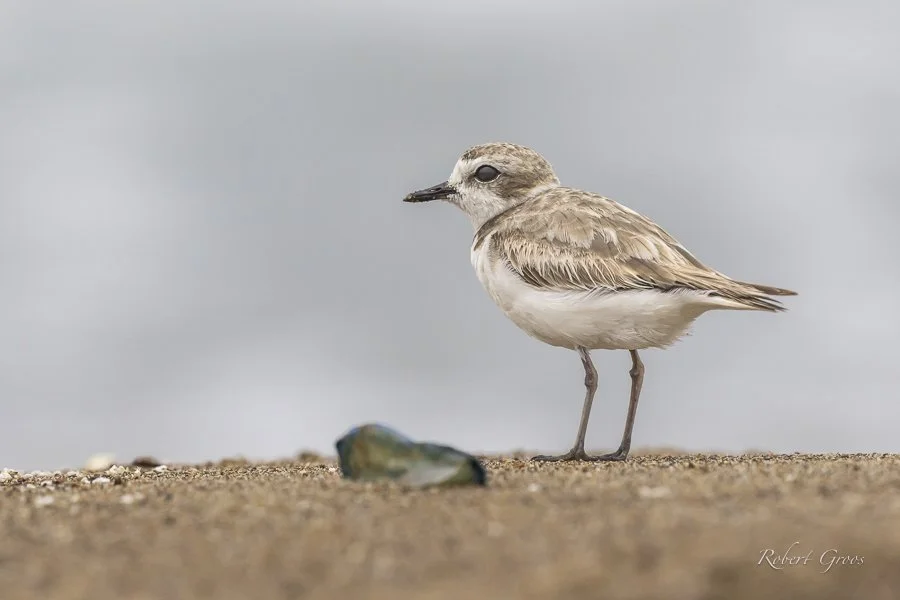
Western Snowy Plover on coastal sand dune
If you enjoyed this post, please share the link with your friends. To be added to my mailing list for future articles, contact me at: robertgroos1@gmail.com. Your information will not be shared, and you can unsubscribe at any time. Thank you.